
Joe Biden Picks Kamala Harris as Running Mate
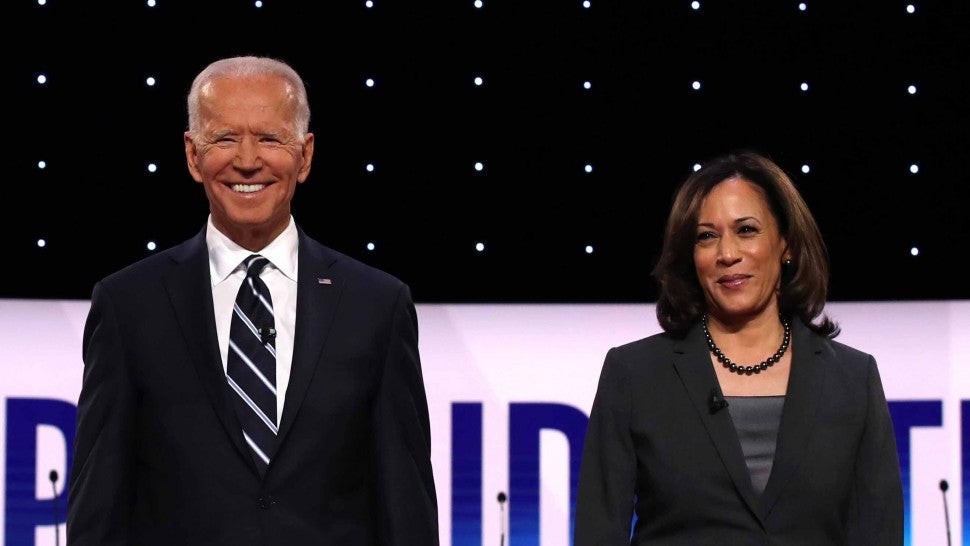
Joe Biden
named California Sen. Kamala Harris as his running mate on Tuesday, making
history by selecting the first Black woman to compete on a major party’s
presidential ticket and acknowledging the vital role Black voters will play in
his bid to defeat President Donald Trump.
In choosing
Harris, Biden is embracing a former rival from the Democratic primary who is
familiar with the unique rigor of a national campaign. Born to a Jamaican
father and Indian mother, the 55-year-old first-term senator is one of the
party’s most prominent figures. She quickly became a top contender for the No.
2 spot after her own White House campaign ended.
In a tweet,
Biden called Harris a “fearless fighter for the little guy, and one of the
country’s finest public servants.”
“Together,
with you, we’re going to beat Trump,” he said.
Harris and
Biden plan to deliver remarks Wednesday near Biden's home in Wilmington,
Delaware.
She joins
Biden in the 2020 race at a moment of unprecedented national crisis. The
coronavirus pandemic has claimed the lives of more than 160,000 people in the
U.S., far more than the toll experienced in other countries. Business closures
and disruptions resulting from the pandemic have caused severe economic
problems. Unrest, meanwhile, has emerged across the country as Americans
protest racism and police brutality.
After
Tuesday’s announcement, Trump quickly tweeted a campaign ad that dismisses
Harris as “phony” and says she and Biden “jointly embrace the radical left.”
Trump’s
uneven handling of the crises has given Biden an opening, and he enters the fall
campaign in strong position against the president. In adding Harris to the
ticket, he can point to her relatively centrist record on issues such as health
care and her background in law enforcement in the nation’s largest state.
Harris’s
record as California attorney general and district attorney in San Francisco
was heavily scrutinized during the Democratic primary and turned away some
liberals and younger Black voters who saw her as out of step on issues of
racism in the legal system and police brutality. She tried to strike a balance
on these issues, declaring herself a “progressive prosecutor” who backs law
enforcement reforms.
Biden, who
spent eight years as President Barack Obama’s vice president, has spent months
weighing who would fill that same role in his White House. He pledged in March
to select a woman as his vice president, easing frustration among Democrats
that the presidential race would center on two white men in their 70s.
Biden’s
search was expansive, including Massachusetts Sen. Elizabeth Warren, a leading
progressive, Florida Rep. Val Demings, whose impeachment prosecution of Trump
won plaudits, California Rep. Karen Bass, who leads the Congressional Black
Caucus, former Obama national security adviser Susan Rice and Atlanta Mayor Keisha
Lance Bottoms, whose passionate response to unrest in her city garnered
national attention.
Rice
congratulated Harris on her selection, calling her a “tenacious and
trailblazing leader.” Rice said she would support Biden and Harris “with all my
energy and commitment.”
Bass
tweeted, “@KamalaHarris is a great choice for Vice President. Her tenacious
pursuit of justice and relentless advocacy for the people is what is needed
right now.”

A woman has
never served as president or vice president in the United States. Two women
have been nominated as running mates on major party tickets: Democrat Geraldine
Ferraro in 1984 and Republican Sarah Palin in 2008. Their parties lost in the
general election.
The vice
presidential pick carries increased significance this year. If elected, Biden
would be 78 when he’s inaugurated in January, the oldest man to ever assume the
presidency. He’s spoken of himself as a transitional figure and hasn’t fully
committed to seeking a second term in 2024. If he declines to do so, his running
mate would likely become a front-runner for the nomination that year.
Harris won
her first election in 2003 when she became San Francisco’s district attorney.
In the role, she created a reentry program for low-level drug offenders and
cracked down on student truancy.
She was
elected California’s attorney general in 2010, the first woman and Black person
to hold the job, and focused on issues including the foreclosure crisis. She
declined to defend the state’s Proposition 8, which banned same-sex marriage
and was later overturned by the U.S. Supreme Court.
As her
national profile grew, Harris built a reputation around her work as a
prosecutor. After being elected to the Senate in 2016, she quickly gained
attention for her assertive questioning of Trump administration officials
during congressional hearings. In one memorable moment last year, Harris
tripped up Attorney General William Barr when she repeatedly pressed him on
whether Trump or other White House officials pressured him to investigate certain
people.
Harris
launched her presidential campaign in early 2019 with the slogan “Kamala Harris
For the People,” a reference to her courtroom work. She was one of the
highest-profile contenders in a crowded Democratic primary and attracted 20,000
people to her first campaign rally in Oakland.
But the
early promise of her campaign eventually faded. Her law enforcement background
prompted skepticism from some progressives, and she struggled to land on a
consistent message that resonated with voters. Facing fundraising problems,
Harris abruptly withdrew from the race in December 2019, two months before the
first votes of the primary were cast.
One of
Harris’ standout moments of her presidential campaign came at the expense of
Biden. During a debate, Harris said Biden made “very hurtful” comments about
his past work with segregationist senators and slammed his opposition to busing
as schools began to integrate in the 1970s.
“There was a
little girl in California who was a part of the second class to integrate her
public schools, and she was bused to school every day,” she said. “And that
little girl was me.”
Shaken by
the attack, Biden called her comments “a mischaracterization of my position.”
The exchange
resurfaced recently one of Biden’s closest friends and a co-chair of his vice
presidential vetting committee, former Connecticut Sen. Chris Dodd, still
harbors concerns about the debate and that Harris hadn’t expressed regret. The
comments attributed to Dodd and first reported by Politico drew condemnation, especially
from influential Democratic women who said Harris was being held to a standard
that wouldn’t apply to a man running for president.
Some Biden
confidants said Harris’ campaign attack did irritate the former vice president,
who had a friendly relationship with her. Harris was also close with Biden’s
late son, Beau, who served as Delaware attorney general while she held the same
post in California.
But Biden
and Harris have since returned to a warm relationship.
“Joe has
empathy, he has a proven track record of leadership and more than ever before
we need a president of the United States who understands who the people are,
sees them where they are, and has a genuine desire to help and knows how to
fight to get us where we need to be,” Harris said at an event for Biden earlier
this summer.
At the same
event, she bluntly attacked Trump, labeling him a “drug pusher” for his
promotion of the malaria drug hydroxychloroquine as a treatment for the
coronavirus, which has not been proved to be an effective treatment and may
even be more harmful. After Trump tweeted “when the looting starts, the
shooting starts” in response to protests about the death of George Floyd, a
Black man, in police custody, Harris said his remarks “yet again show what
racism looks like.”
Harris has
taken a tougher stand on policing since Floyd’s killing. She co-sponsored
legislation in June that would ban police from using chokeholds and no-knock
warrants, set a national use-of-force standard and create a national police
misconduct registry, among other things. It would also reform the qualified
immunity system that shields officers from liability.
The list
included practices Harris did not vocally fight to reform while leading
California’s Department of Justice. Although she required DOJ officers to wear
body cameras, she did not support legislation mandating it statewide. And while
she now wants independent investigations of police shootings, she didn’t
support a 2015 California bill that would have required her office to take on
such cases.
“We made
progress, but clearly we are not at the place yet as a country where we need to
be and California is no exception,” she told The Associated Press recently. But
the national focus on racial injustice now shows “there’s no reason that we
have to continue to wait.”
No comments