
SERGIO ROMERO, EVER-READY, ROCK-STEADY

For the
majority of Manchester United’s serene progress through the 2019/20 Europa
League tournament, Sergio Romero was between the sticks, resuming his ongoing
connection with this competition.
The Reds’
first-leg meeting with LASK in Austria may have taken place against unfamiliar
opponents in a then wholly unique setting – our first ever behind-closed-doors
fixture – but the 33-year-old stopper was a familiar face in goal for his
seventh Europa League appearance of the season, and his 21st in total for United
in this competition.
Romero’s
subsequent shut-out in the Linzer Stadium was his 39th clean sheet in his 58th
game for the club, providing just the latest instalment in an astonishing
concessions record which outstrips every other goalkeeper in the club’s
history. While Nick Culkin and Paul Rachubka can boast unblemished records of
keeping goal for the Reds without ever conceding, their combined playing time
of 104 first-team minutes render the duo statistical anomalies.
Despite
playing with varying regularity in the last five seasons, Romero had kept clean
sheets in almost exactly two-thirds of his games [before Wednesday's 2-1
second-leg win]. By comparison, for all the custodians in United’s history,
only Edwin van der Sar and Roy Carroll were able to top clean sheets in just
over half of their games.
The
Argentinian’s record is impressive, especially coming in a supporting role to
David De Gea, the man regarded by many – including United manager Ole Gunnar
Solskjaer – as the world’s best stopper. “It’s not easy,” Romero
admitted late last year.“But I work every day for this chance to play, and then
I am ready when it comes. I work hard, and I am at the best club in the world.
I said I wanted to play for United one day when I was younger, and now I worked
to get my chance.”

Back in
February 2016, Romero marked his first outing in the Europa League for United
with a world-class save to claw away Paul Onuachu’s header for Midtjylland and,
although the Danes sprung an upset that evening with a 2-1 home win, Romero has
gone unbeaten in his subsequent 20 ties in this competition, enjoying 16 wins
and four draws. His 14 clean sheets in those 21 games perfectly mirrors his
overall record for the Reds and, for senior goalkeeping coach Richard Hartis,
the numbers are a product of Romero’s meticulous preparation.
“He’s
obviously an experienced goalkeeper,” says Hartis. “He’s an
international goalkeeper who has played in a World Cup final. I’ve found him to
be extremely hard working. Very robust emotionally. He turns up to work every
day and looks to better himself. Even now, at 33, he’s looking to make
improvements to some fundamentals of his game, which is really refreshing.
“Good
players adapt, so as players get a little bit older and the body slows down a
little bit, the brain speeds up more. Sergio’s showing that adaptability. His
thirst for knowledge means that he wants to come and see his clips after
training, after the games, he’s still striving to improve, to be the best he
can be. What that does is, for him, it gives him that level of consistency
around his performance.
“He doesn't
have big swings in readiness. He’s able to be ready, which is a skill in
itself.
“He’s a very
professional guy” continues Hartis. ”He takes his work seriously. I think
since I’ve been back here he’s only missed one training session, so he’s on the
grass, doing what’s asked of him, every single day. His mentality fits in with
the other top keepers that I’ve had the opportunity to work with. Edwin van der
Sar was like that. Sergio fits in with an elite-level goalkeeper.”
While the fundamental role of a goalkeeper remains the same – keep the round thing out of
the net – Hartis concedes that the specifications of the position have evolved
in tandem with football’s wider trends, putting greater demands on Romero and
his fellow custodians to be ingrained in the collective’s approach to any given
fixture.
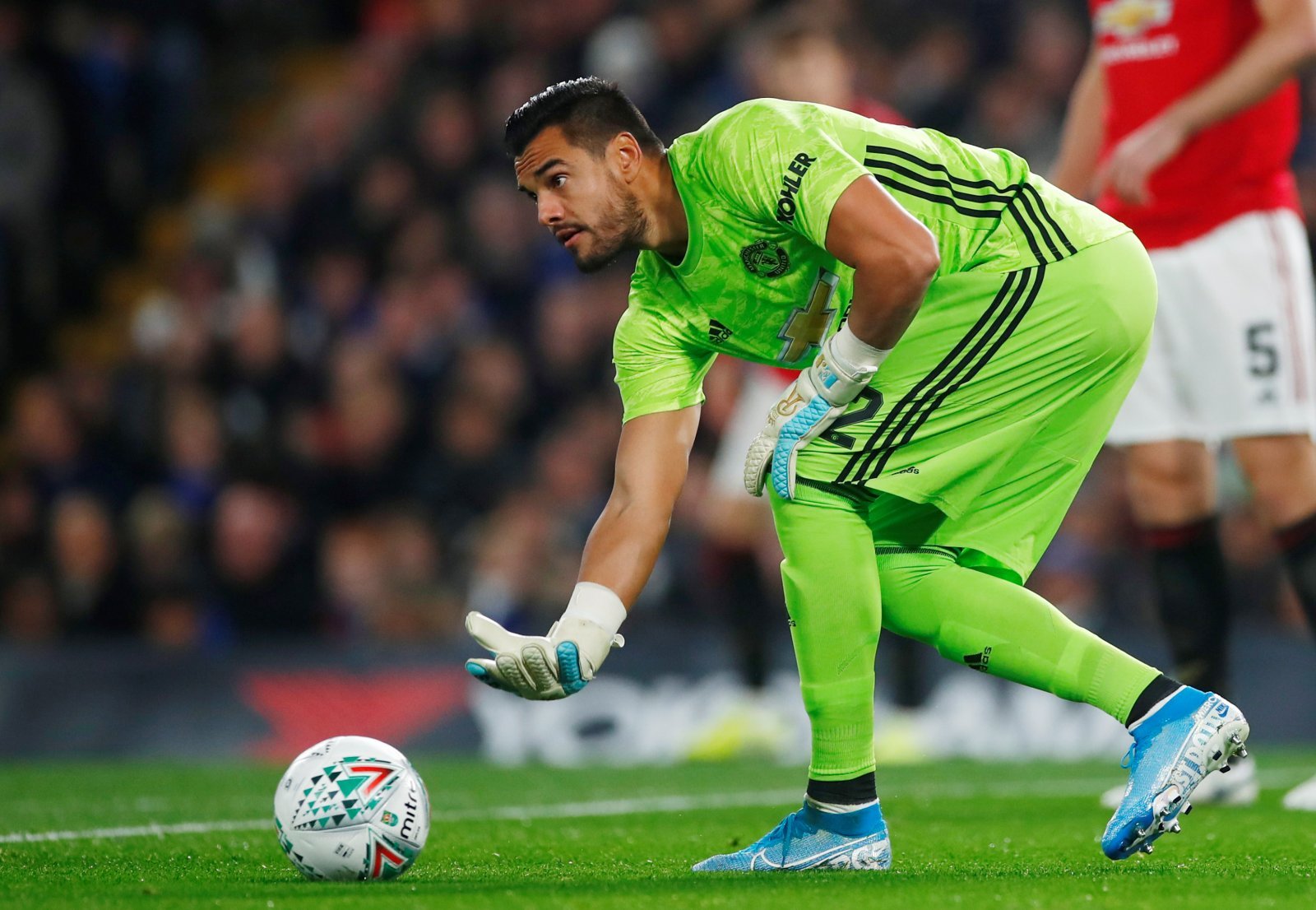
“Now, teams
attack with 11 and defend with 11,” says the coach, who spent 10 years at
the Reds between 2000 and 2010 before rejoining for a second stint last
summer. “The keepers are more integrated into the build phase, how you
break the press. They have to understand how the opposition are pressing, they
have to understand where their optimal support positions are, and the strengths
of the players, as footballers, who they’re playing with. The out-of-possession
game hasn’t changed that much other than maybe the balls are a little bit
quicker and the players are a little bit quicker.
“Also the referee now, with VAR, has an effect, and many of these things are evolving.
Good goalkeepers have to affect the game out of possession. They have to get a
team playing when others can’t and save things that others can’t. That’s what
goalkeepers here do. If you look at Sergio tactically, he’s very astute, so he
processes lots of information very quickly with the game to help his
decision-making, in the same way, that David does.
“Experienced
goalkeepers do that. They’ve got this big bank of knowledge that they can
access and so when he’s asking questions about the opposition and how they
press, that process becomes quite streamlined because he’s asking the really
good questions that helps him get to what he needs to know really quickly. When
we have the conversations around being either in or out of possession, the
tactical requirements, Sergio picks it up really quickly because of his
experience.”
That
mentality underpins and facilitates Romero’s ability to adapt to an
ever-revolving set of circumstances around his every appearance. In his Reds
career, he has already faced 42 different clubs – one more than Fabien Barthez
opposed in 139 appearances. But unfamiliarity isn’t just restricted to
opponents; in his 60 outings, Sergio has played behind 53 different starting
defensive combinations and hasn’t had the same defence in successive games
since both legs of the 2017 Europa League semi-final against Celta Vigo.
For that,
Hartis is keen to share credit around. “I think that’s testament to the
adaptability of the players – not just Sergio, but the players that he’s
playing with,” he says. “I think it’s a testament to how the teams
are prepared. To put a group of people on to the pitch who know their jobs is a
sign of good leadership, good coaching, clear game-plans, clear understanding
of the players, and the players having a high ability to process that
information quickly and be able to act on it. You need that if you’re going to
play here because we don’t get a lot of preparation time for games.”
For an added
dash of roulette, Romero had never played more than four successive games in
the same competition until the midweek outing against LASK; a variable which
has a considerable bearing for all players, but none more than
goalkeepers. “The balls that we play with vary from competition to
competition, so you have to have that adaptability,” says Hartis. “It
might sound like a small thing, but the balls move in different ways, so being
able to adjust from one ball to the next is a skill. It depends on what you’re
doing with them. Some of the balls move more quickly in the air than others,
some of them will move quite violently when they’re stuck at pace at the goal,
and they vary with our schedule. You might only have a couple of days to prep
with that particular ball, so that ability to adapt is very helpful for him to
prep for those games. His adaptability and his mentality are reflected in the
numbers that he puts up when he’s represented the football club.”
The
goalposts may not be moving, but all around them is. Except, of course, for
Sergio Romero; ever-ready and rock-steady.
No comments