
First Woman Physics Nobel Winner in 55 Years Named
The Nobel
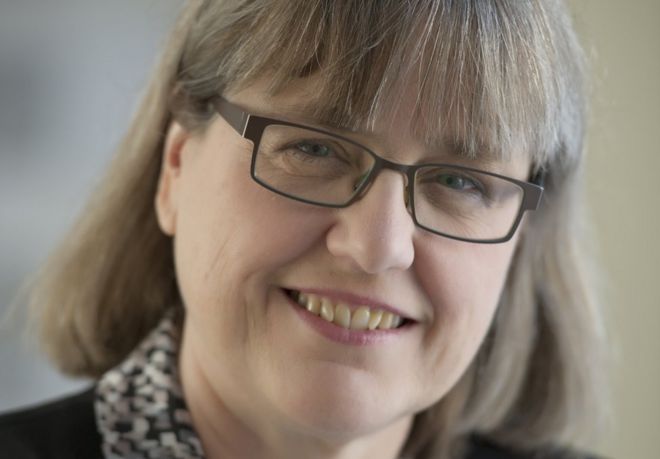
Prize in Physics has been awarded to a woman for the first time in 55 years.
Donna
Strickland, from Canada, is only the third woman winner of the award, along
with Marie Curie, who won in 1903, and Maria Goeppert-Mayer, who was awarded
the prize in 1963.
Dr
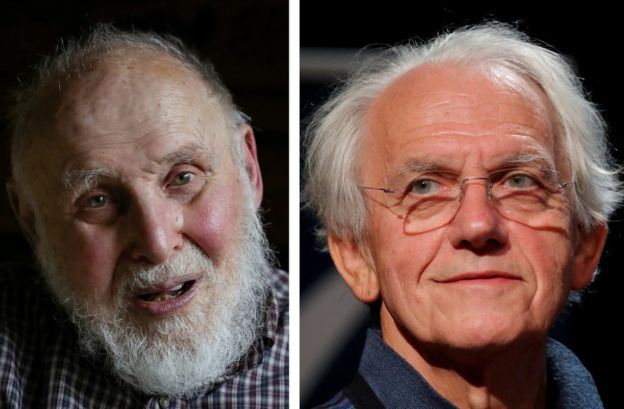
Strickland shares this year's prize with Arthur Ashkin, from the US, and Gerard
Mourou, from France.
It
recognises their discoveries in the field of laser physics.
Dr Ashkin
developed a laser technique described as optical tweezers, which is used to
study biological systems.
Drs Mourou
and Strickland paved the way for the shortest and most intense laser pulses
ever created. They developed a technique called Chirped Pulse Amplification
(CPA). It has found uses in laser therapy targeting cancer and in the millions
of corrective laser eye surgeries which are performed each year.
Speaking to
the BBC, Dr Strickland said it was "surprising" it had been such a
long time since a woman had won the award.
However, she
stressed that she had "always been treated as an equal", and that
"two men also won it with me, and they deserve this prize as much if not
more than me".
The award
comes a few days after a physicist gave a "highly offensive"
lecture at the Cern particle physics laboratory in Geneva in which he said
that physics had been "built by men" and that male scientists were
being discriminated against.
Dr
Strickland called the physicist's remarks "silly" and said she never
took such comments "personally".
The last
woman to win the physics prize, German-born American physicist Maria
Goeppert-Mayer, took the award for her discoveries about the nuclei of atoms.
Polish-born
physicist Marie Curie shared the 1903 award with her husband Pierre Curie and
Antoine Henri Becquerel for their research into radioactivity.
The award is
worth a total of nine million Swedish kronor (£770,686; $998,618).
Reacting to
her win, Dr Strickland, who is based at the University of Waterloo in Canada,
said: "First of all you have to think it's crazy, so that was my first
thought. And you do always wonder if it's real.
"As far
as sharing it with Gerard, of course he was my supervisor and mentor and he has
taken CPA to great heights so he definitely deserves this award. And I'm so
happy Art Ashkin also won."
She added:
"I think that he made so many discoveries early on that other people have
done great things with that it's fantastic that he is finally recognised."
In a
statement, the American Institute of Physics (AIP) offered its congratulations
to all the winners, adding: "The countless applications made possible by
their work, like laser eye surgery, high-power pettawat lasers, and the ability
to trap and study individual viruses and bacteria, only promise to increase
going forward.
"It is
also a personal delight to see Dr Strickland break the 55-year hiatus since a
woman has been awarded the Nobel Prize in Physics, making this year's award all
the more historic."
Before Dr
Strickland and Dr Mourou's pioneering work, the peak power of laser pulses was
limited because, when cranked up to high intensities, they would destroy the
material used for amplifying its energy.
To get round
this, the researchers first stretched the laser pulses in time to reduce their
peak power, then amplified them and finally compressed them.
When a laser
pulse is compressed in time and becomes shorter, more light is packed into a
small space. This dramatically increases the intensity of the pulse.
Dr
Strickland and Dr Mourou's technique, called chirped pulse amplification (CPA),
became standard for high intensity lasers.
Arthur
Ashkin realised an old dream in science fiction - using the radiation pressure
of light to move physical objects. In doing so, he invented the optical
tweezers that are today used to grab particles, atoms, viruses and living cells
with their laser-based pincers.
He first
worked on getting laser light to push small particles towards the centre of the
beam and hold them there.
Then, in
1987, he used the tweezers to capture living bacteria without harming them. The
technique is now used widely to study the machinery of life.
2017 -
Rainer Weiss, Kip Thorne and Barry Barish earned the award for the
detection of gravitational waves.
2016 - David
Thouless, Duncan Haldane and Michael Kosterlitz shared the award for their
work on rare phases of matter.
2015 - Takaaki
Kajita and Arthur McDonald were awarded the prize the discovery that
neutrinos switch between different "flavours".
2014 - Isamu
Akasaki, Hiroshi Amano and Shuji Nakamura won the physics Nobel
for developing the first blue light-emitting diodes (LEDs).
2013 -
Francois Englert and Peter Higgs shared the spoils for formulating
the theory of the Higgs boson particle.
2012 - Serge
Haroche and David J Wineland were awarded the prize for their work with
light and matter.
FROM bbc.com/news/science-environment
No comments