
Armed Forces Clash in Sudan Protest
Soldiers
tried to chase away pick-up trucks firing tear gas, on the second night of a
sit-in protest calling for President Omar al-Bashir to resign.
Protesters
sought shelter in a navy facility, a witness said, as tension among the armed
forces was laid bare.
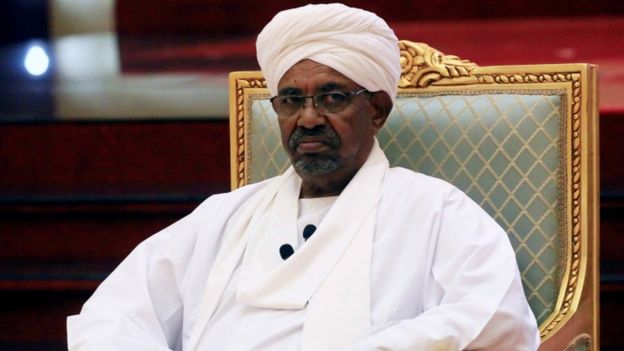
Mr
Bashir has so far refused demands to make way for a transitional government.
One protester told
the BBC's Newsday programme that a number of pick-up trucks arrived and began
firing tear gas and live ammunition at the thousands of sit-in protesters in
the Sudanese capital.
She
said the military was at first neutral but then tried to chase the security
forces away.
It is unclear who
the security forces were but BBC Africa editor Fergal Keane says reports
indicate they included agents from the powerful National Intelligence and
Security Service (NISS).
The
eyewitness said the security forces returned for a second attack and people
then ran towards a navy facility to seek shelter from the prolonged firing.
Ali Ibrahim, of the
Sudanese Professionals Association (SPA), which has organised the protest, told
EFE news agency that military units had fired into the air to prevent security
forces dispersing the sit-in.
There
are unconfirmed reports of casualties from the scene. Video on social media
showed protesters hiding behind walls as shots ran out.
One resident of a
district 5km (3 miles) away told Reuters the tear gas could be felt there.
The
sit-in is taking place outside the army HQ and Agence France-Presse quotes
witnesses as saying the army has now deployed troops around the building and is
erecting barricades in streets near the compound. The army's intentions
surrounding the protest remain unclear.
Information Minister
Hassan Ismail said the protesters in front of the HQ had been "cleared
completely" and the security apparatus was "coherent and working with
positive energy and in harmony".
The Sudanese state
has numerous armed groups and there are signs of tensions between them.
The
demonstrators accuse the NISS and the Rapid Support Forces (RSF) of attempting
to drive them away from the protest. The RSF is a militia loyal to President
Bashir which is made up of former members of the Janjaweed, the fighters
accused of carrying out many atrocities in Darfur.
Over
the past 48 hours, several protesters have told the BBC that members of the
Sudanese Armed Forces (SAF) have protected them from the NISS and RSF. However,
many Sudanese still distrust the armed forces, because of their role in keeping
President Bashir in power and their conduct in the country's succession of
civil wars.
Some
analysts believe that mid-ranking SAF officers are sympathetic to the
protesters, with the top brass more likely to be loyal to the president. But
the position of all the armed groups is one of the key questions in Sudan
today.
It
was the biggest protest against the president since unrest began in December
and marked the 34th anniversary of the coup that overthrew the regime of former
President Jaafar Nimeiri.
The demonstrators
appear to be hoping for an internal coup, pleading with the army command to remove
Mr Bashir, who has been in power for nearly 30 years, and open the way for a
transitional government.
The
police say only one person has died in the latest protests - in Omdurman,
Khartoum's twin city - but social media reports suggest at least five protesters
have been killed.
Since the unrest
began, Human Rights Watch says protest-related violence has killed 51 people,
although officials put the figure at 32, AFP reports.
The protests were
originally sparked by a hike in the cost of living but demonstrators are now
calling for the president to go.
Sudan's
economy has long been strained since the US imposed sanctions more than 20
years ago, accusing Khartoum of sponsoring terror groups.
In December, the
government announced the price of fuel and bread would rise. In the year
leading up to this, inflation had risen while the Sudanese pound fell rapidly
in value.
Mr
Bashir's rule has been blighted by accusations of human rights abuses. In 2009
and 2010, the International Criminal Court (ICC) charged him with counts of
genocide, war crimes and crimes against humanity. A warrant for his arrest has
been issued.
In
February, it looked like he might give in to protests and step down, but
instead Mr Bashir declared a state of
national emergency.
He
says the protesters have legitimate grievances but should only replace him
through elections.
The SPA - a
collaboration of health workers and lawyers - has been organising the protests.
Doctors have emerged
as a leading force and as a result are being targeted by the authorities.
It
is estimated that up two thirds of the protesters are women, who say they are
demonstrating against Sudan's sexist and patriarchal society
FROM .bbc.com/news/world-africa-
No comments