
Innovative Child Malaria Vaccine Test Starts in Malawi
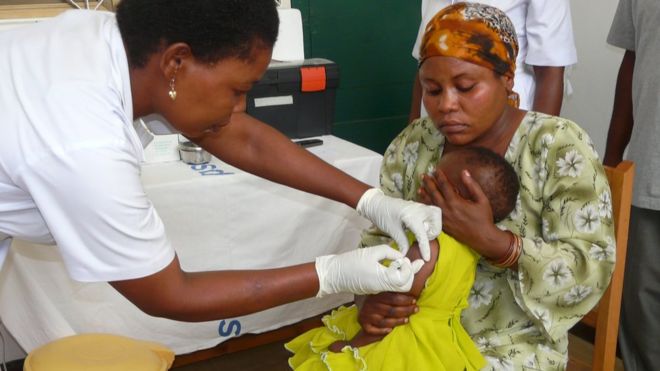
A
large-scale pilot of what has been called the world's first malaria vaccine to
give partial protection to children has begun in Malawi.
The RTS,S
vaccine trains the immune system to attack the malaria parasite, which is
spread by mosquito bites.
Earlier,
smaller trials showed that nearly 40% of the 5-to-17-month-olds who
received it were protected.
Malaria
cases appear to be on the rise again after a decade of success in combating the
deadly disease.
"This
is a landmark moment for immunisations, malaria control, and public
health," Dr Kate O'Brien, Director of Immunisation and Vaccines at the
World Health Organization, told the BBC.
According to
the most recent annual figures, global malaria cases are no longer falling,
sparking concerns about its resurgence.
Malawi is
the first of three countries chosen for the pilot to roll out the vaccine. It
aims to immunise 120,000 children aged two years and below. The other two
countries, Ghana and Kenya, will introduce the vaccine in the coming weeks.
The three
countries were picked because they already run large programmes to tackle
malaria, including the use of bed nets, yet still have high numbers of cases.
Malaria
kills some 435,000 people around the world each year, the majority of them
children. Most of these deaths are in Africa, where more than 250,000 children
die every year, according to the World Health Organization (WHO).
Dr O'Brien
said that malaria is "a really difficult disease to develop a vaccine
against".
An early
trial of the vaccine began in 2009.
"There
were seven countries participating in a large trial where over 15,000 children
participated," Dr David Schellenberg, who has been working on the
development of the vaccine with the WHO, told the BBC's Newsday programme.
"[The
trial] showed pretty clearly that this vaccine is safe and it is efficacious in
terms of its ability to prevent clinical malaria episodes and also severe
malaria episodes," he said.
RTS,S has
been more than three decades in the making, with scientists from drugs company
GSK creating it in 1987.
Years of
testing supported by a host of organisations, including the Path Malaria
Vaccine Initiative, and costing an estimated $1bn (£770m), have led to this
point.
The nearly
40% efficacy is not high in comparison with vaccines for other diseases, but Dr
Schellenberg says RTS,S will add to the preventative measures, such as bed nets
and insecticides, already being used.
"Nobody
is suggesting that this is a magic bullet," Dr Schellenberg said.
"It may
not sound like much but we're talking about 40% reduction in severe malaria which
unfortunately still has high mortality even when you have good access to good
treatment," he added.
Dr O'Brien
said the vaccine lasted for at least for seven years and would target infants
because they are most at risk.
The vaccine
needs to be given four times - once a month for three months and then a fourth
dose 18 months later.
Dr
Schellenberg accepted that it might be a challenge for mothers in some areas to
take their children to clinics for all four doses.
This stage
of the trial is expected to be completed by 2023, according to Path.
FROM .bbc.com/news/world-africa
No comments