
US Supreme Court Hears Arguments Over Trump's Tax Returns
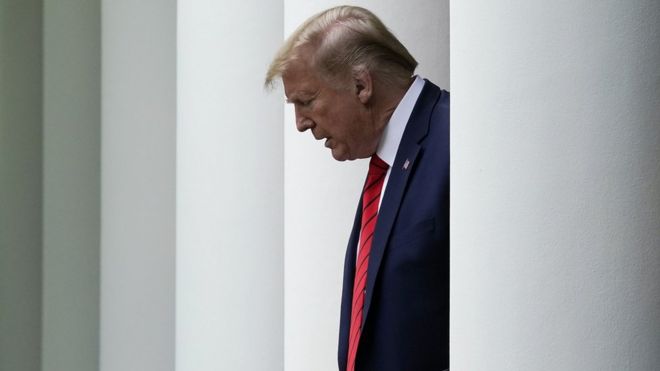
Mr
Trump declines to share documents that could shed light on his fortune and the
work of his family company.
Two
congressional committees and New York prosecutors demand the release of his tax
returns and other information.
Mr
Trump's private lawyers argue he enjoys total immunity while in office.
Experts
say the ruling will have far-reaching implications for the ability of Congress
to scrutinise the activities of sitting presidents and of prosecutors to
investigate them.
A
decision is expected before the US presidential election in November. A ruling
against Mr Trump could mean the release of his personal financial information
in the campaign season.
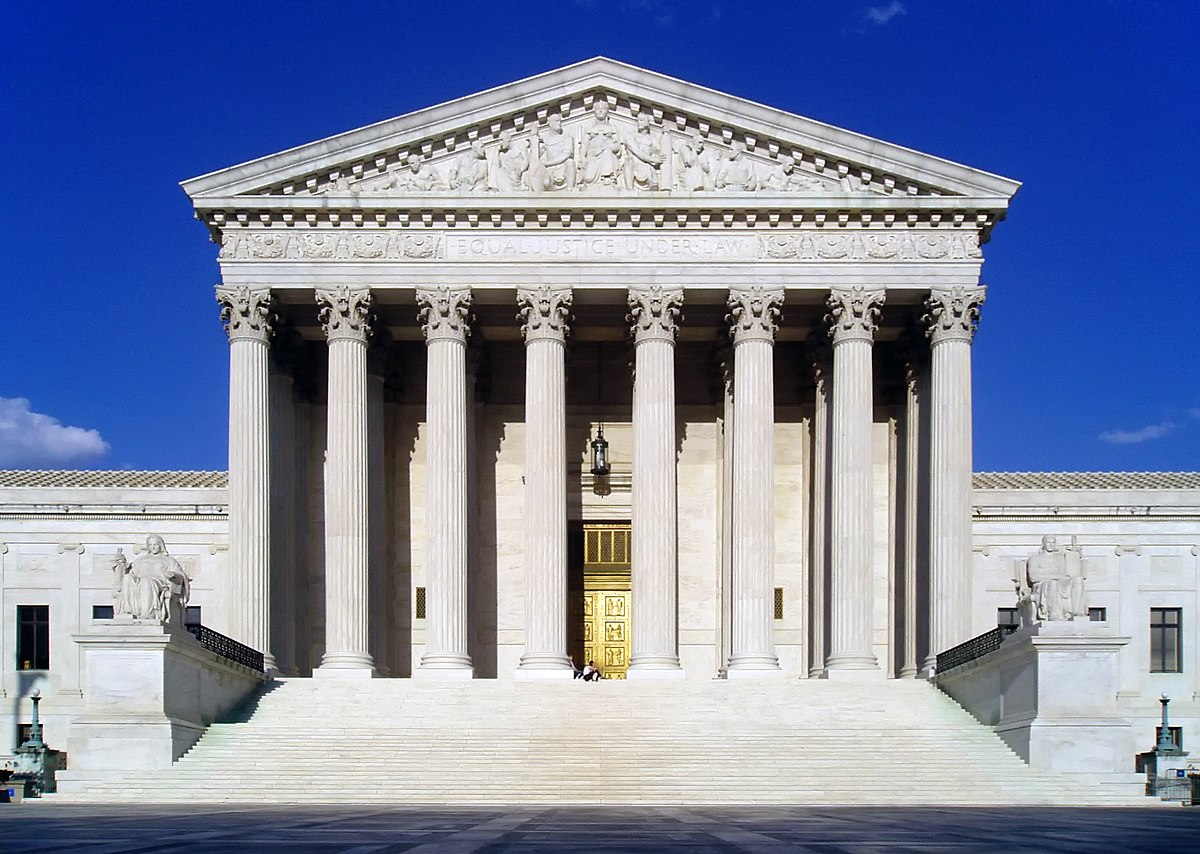
The
judges will hear the cases remotely because of the coronavirus pandemic. The
Supreme Court has a 5-4 conservative majority and includes two Trump appointees
- Neil Gorsuch and Brett Kavanaugh.
In
the three cases being heard, Mr Trump's lawyers tried to block the subpoenas -
orders to hand over evidence. Lower courts in Washington and New York ruled against the president in
all cases, but those decisions have been put on hold pending a final court
ruling.
Two
committees at the Democratic-controlled House of Representatives demanded
financial records from two banks that did deals with Mr Trump - Deutsche Bank
and Capital One - as well as from Mazars, the president's accountants.
Deutsche
Bank was one of the few banks willing to lend to Mr Trump after a series of
corporate bankruptcies in the 1990s, and the documents sought to include
records related to the president, the Trump Organization and his family.
Mr Trump's lawyers
argued that Congress had no authority to issue the subpoenas, and no valid
justification to seek the records.
Mazars is also the
recipient of a subpoena from Manhattan District Attorney Cyrus Vance Jr, a
Democrat.
The
investigation concerns alleged hush money payments made by Mr Trump's former
lawyer Michael Cohen to two women - adult film star Stormy Daniels and former
Playboy model Karen McDougal - who both say they had affairs with Mr Trump. The
president denies the affairs took place.
In
this case, Mr Trump's lawyers said his records could not be handed over because
his position as president gave him immunity from any criminal proceeding while
in office.
The
banks and the accounting firm said they would release the information if
ordered.
The congressional
cases were heard together, and the justices seemed divided on their
inclinations. The liberals appeared more sympathetic toward the House position
although they raised questions about the potential lack of limits on Congress'
power to subpoena the president's personal records.
The
justices asked Douglas Letter, a lawyer for the House, to explain why the
subpoenas were not simply harassment of the president, and whether Congress
should be limited in issuing them. Mr Letter pointed out that the measures, in
these cases, were directed at third parties and had been upheld by lower
courts.
But
Jeffrey Wall, a Justice Department lawyer who argued in favour of Mr Trump,
said the subpoenas had a "profound potential" to "harass and
undermine the president".
"It
is not much to ask that before the House delves into the president's personal
life it explains in some meaningful way what laws it is considering and why it
needs the president's documents in particular. The subpoenas here don't even
come close."
But
the bigger issue, the one that loomed over the justices' teleconference,
concerned the balance of power between Congress and the presidency.
The
discussion on the call was amiable enough, with one of the lawyers referring to
the others as his "friends".
But
below the banter, the debate was fierce: conservative justices asked questions
that showed their concerns about the harassment of the president and the
erosion of the power of the executive branch. In turn, liberal justices asked
questions that showed their worries about Trump's time in office and about the
presidency itself.
The
liberal justices clearly want to rein him in and restrict the power of the
office. Ultimately, the Supreme Court teleconference sounded much like debates
taking place across the US, a deeply divided nation in which people are
fighting over fundamental beliefs and principles - with Trump, as always, at
the red-hot centre.
Justice
Roberts also seemed to disagree with Mr Letter, who argued that lawmakers had
broad authority to seek information about a president for the purpose of
writing laws. "Your test is not much of a test. It's not a
limitation," the chief justice said.
Liberal
Justice Elena Kagan told Jay Sekulow, a lawyer for Mr Trump, that a
"fundamental precept of our constitutional order is that the president is
not above the law".
But
Mr Gorsuch expressed concern that members of Congress were abusing the process
to hunt for illegal activity, saying: "Normally we use law enforcement
tools like subpoenas to investigate known crimes and not to pursue individuals
to find crimes."
Unlike other recent
presidents, Mr Trump has refused to release his tax returns, and the cases
resemble earlier disputes over the powers of a sitting president.
In
1974, the court unanimously decided that President Richard Nixon must comply
with a court's subpoena for tape recordings in the Watergate scandal. And in
another unanimous decision, in 1997, it allowed a sexual harassment lawsuit to
go forward against President Bill Clinton.
Justices
appointed by Mr Nixon and Mr Clinton voted against them in the cases.
FROM .bbc.com/news/world-us-canada
No comments