
We Will Have Summer Tourist Season, Promises EU
"Our
message is we will have a tourist season this summer," said economic
affairs commissioner Paolo Gentiloni, "even if it's with security measures
and limitations."
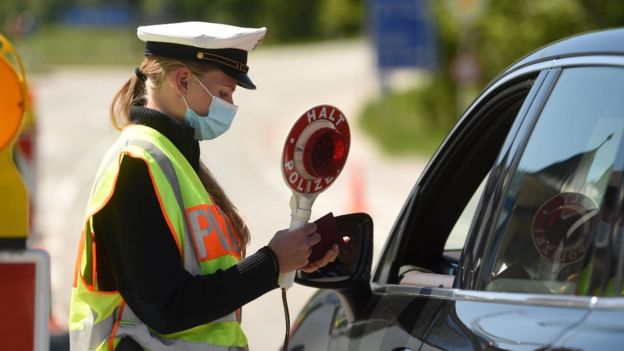
Borders
closed across the EU, including the border-free Schengen zone.
But
states are starting to reopen them.
Austria
and Germany have become the latest EU countries to agree to remove travel
restrictions.
From
Friday there will be random checks at border crossings and then on 15 June free
movement should resume. "We want to make people's everyday lives easier
and take another step towards more normality," said Chancellor Sebastian
Kurz.
UK
travellers have already been warned not to expect "lavish"
international holidays, with plans for a 14-day quarantine on air arrivals. But
travel without quarantine will be possible to France and Ireland.
The scale of the
crisis was illustrated by travel giant Tui announcing the loss of up to 8,000
jobs worldwide with plans to cut costs by 30%. The German government has given
the company a €1.8bn (£1.6bn; $1.9bn) bridging loan to stay afloat.
The European
Commission said its guidance was based on the principles of safety and
non-discrimination. Tourism provided almost 10% of Europe's economic output and
millions of jobs across the 27 member states relied on it.
Commission
Vice-President Margrethe Vestager said no-one should travel if they felt sick
or experienced symptoms.
The
non-binding plans involve countries working together to gradually remove travel
bans and then border checks, while keeping targeted measures as the Covid-19
outbreak comes under control across the member states.
A
phased approach would start by allowing seasonal workers across borders,
followed by a lifting of restrictions between countries with the virus under a
similar level control and then the opening of all the EU's internal borders.
We're not talking
about jumping from lockdown to European beach party overnight.
Here
in Belgium shops have only just re-opened, schools follow next week but with
umpteen social distancing measures in place.
So
what does that mean for holidaymakers? Ultimately each EU country will decide
about its own borders and beaches but the advice from Brussels is: slowly,
slowly - depending on infection rates.
First
open up for goods and workers needed to keep economies going. Then for tourists
and ONLY if destinations have Covid-19 testing and tracing measures in place -
with tight controls on transport, accommodation and leisure activities.
Basically:
don't pack your swimsuit just yet.
"Workers and
travellers need to know that hotels, restaurants and beaches are safe,"
said Ms Vestager. She added that the various contact-tracing apps being worked
on by European countries to monitor the spread of Covid-19 would have to work
across Europe.
One of the big
questions for European consumers is what will happen if their trips are
cancelled.
Ms
Vestager accepted that, while travel companies faced a cash crunch,
"European consumers have the right to a cash refund if that's what they
want". She said the crunch would be less severe if consumers agreed to
take vouchers, so recommendations would be made on how to make that option more
attractive.
"Of
course this isn't going to be a normal summer but when we all work together...
then we don't have to face a completely lost summer," she told reporters.
Among the
recommendations:
§
Rail and air tickets should be
bought and checked in online with physical distancing at security checks
§
Food and drink may no longer be
on sale on board flights to limit contact
§
Fewer passengers should be
allowed on board aircraft, buses, trains and ferries and disinfecting gels
should be available
§
Passengers not from the same
household may be seated apart
§
All transport staff should have
protective equipment, with possible protective barriers for drivers.
Mr
Gentiloni said Italy's tourist season had already been badly hit as the first
half of main period from March to May had already been lost.
The EU is keen to
get countries in the EU and the Schengen zone working together, as many are
moving at a different pace in lifting their lockdowns.
Some
countries have already imposed quarantine measures on travellers. From Friday,
arrivals in Spain will have to go into quarantine for 14 days.
The
UK, which has left the EU but still operates under its rules this year, plans
to impose a 14-day quarantine on arrivals by air. However, it has agreed
bilateral travel arrangements with France and Ireland that mean there would be
no quarantine involved. Beaches in France's north-western Brittany region began
reopening to visitors on Wednesday but under tight restrictions.
England's
health secretary, Matt Hancock, said on Tuesday that "big, lavish
international holidays" this year were unlikely this year, although some
hospitality could resume from July. A "Baltic bubble" is set to come
into operation on Friday, enabling travel by rail, sea and air across Estonia,
Latvia and Lithuania, but with a quarantine initially in place for travellers
from other states. All travellers will have to be free of Covid-19 symptoms and
Latvia has urged people to decide whether travel is absolutely necessary.
FROM .bbc.com/news/world-europe
No comments