
China Call’s UK Ban on Huawei 5G kit 'Groundless'
The Chinese
government has said it is "strongly opposed" to the UK's
"groundless" ban of Huawei's 5G kit.
Foreign
Ministry spokeswoman Hua Chunying added Beijing would "take measures to
safeguard" the "legitimate interests" of Chinese companies.
But
President Trump welcomed the move.
"We
convinced many countries, many countries - and I did this myself for the most
part - not to use Huawei because we think it's an unsafe security risk,"
the US leader said.
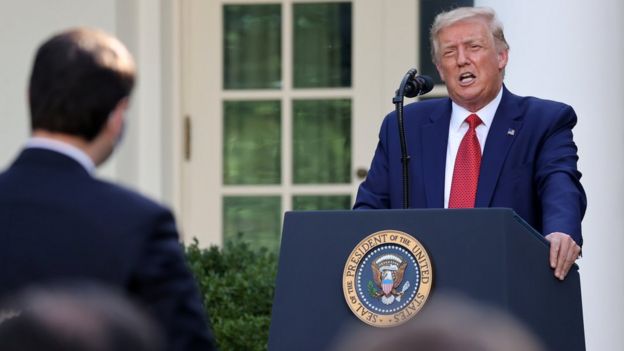
Mr Trump
made the comments as he attempted to increase pressure on Beijing by announcing
an executive order ending preferential treatment for Hong Kong in response
to a new security law brought in by China.
Huawei has
repeatedly said it would not cause harm to any country.
The UK's
digital secretary announced on Tuesday the country's telecoms networks would
not be allowed to buy new Huawei 5G kit from 31 December and all such equipment
should be stripped out of mobile networks by 2027.
In addition,
it wants BT's Openreach and other broadband infrastructure providers to stop
using Huawei's gear in the rollout of full-fibre broadband within the next
couple of years.
China's
ambassador to the UK said the decision was "not only disappointing, it's
disheartening".
"The
way you treat Huawei will be followed very closely by other Chinese
businesses," Liu Xiaoming added.
But the
foreign ministry arguably used even stronger language.
"The UK
side has used groundless risks as an excuse to co-operate with the United
States... violating the relevant commitments made by the UK," Ms Hua said.
"Any
decisions and actions must come at a cost," she added, without being more
specific.
Mr Huiyao
Wang - an adviser to the Chinese government - told BBC Radio 4's Today
programme Beijing still hoped the 2027 ban might be reversed before it came into
effect.
But, as
things stood, it could have an impact on other Chinese investment in Britain.
"It
goes against the UK tradition as the open liberal leader in free trade,"
the founder of the Centre for China and Globalisation think tank said.
"This
is going to probably have very negative implications."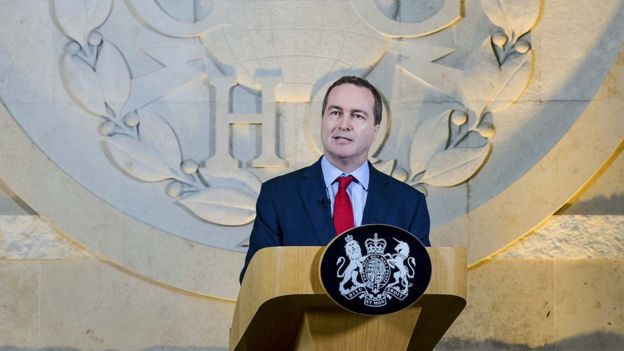
The UK
government said it had based its decision on the advice of security chiefs who
had judged they could no longer mitigate the risks of using Huawei's equipment
in light of new US sanctions.
The
sanctions are designed to prevent the company having its own chips
manufactured, making it buy in supplies from elsewhere.
And GCHQ's
National Cyber Security Centre said this meant Huawei's equipment was
likely to face more "security and reliability problems" as a
consequence.
Robert
Hannigan, the former director of GCHQ, told BBC News the sanctions had indeed
made "a critical difference".
"[It]
really pushes all the production and design and testing into China and makes it
extremely difficult for anyone to see what is going on," he said.
But he did
not believe any Chinese retaliation would come in the form of a hack attack.
"No
doubt China will want to express its displeasure," Mr Hannigan said.
"But
there's no particular reason to think that will be in cyber-space.
"There
will be a lot of a lot of sound and fury.
"It may
not amount to that much in the end."
The UK
accounts for a only small fraction of Huawei's revenue, which grew 13% in
the first half of the year despite earlier efforts by Washington to
disrupt its business.
However, its
concern is Westminster's move will motivate other countries to take similar
measures.
Announcing
the ban to the House of Commons on Tuesday, Digital Secretary Oliver Dowden
said it had not been an easy decision but was the right one for UK telecoms
networks, national security and the UK economy.
He said the
cumulative cost, when coupled with earlier restrictions announced against
Huawei, would be up to £2bn, and the total delay to 5G's rollout would be two
to three years .
5G
technology promises faster internet speeds and the capacity to support more
wireless devices, which should be a boon to everything from mobile gaming to
higher-quality video streams. 5G connections are already available in dozens of
UK cities and towns, but coverage can be sparse.
The UK last
reviewed Huawei's role in its telecoms infrastructure in January, when it was
decided to let the company remain a supplier but introduced a cap on its market
share.
But in May
the US introduced new sanctions designed to disrupt Huawei's ability to get its
own chips manufactured.
The Trump
administration claims that Huawei provides a gateway for China to spy on and
potentially attack countries that use its equipment, suggestions the company
strongly rejects.
The US has
called for members of the Five Eyes alliance - which also includes the UK,
Canada, Australia and New Zealand to avoid Huawei kit.
No comments