
Donald Trump Suggests Delay to 2020 US Presidential Election
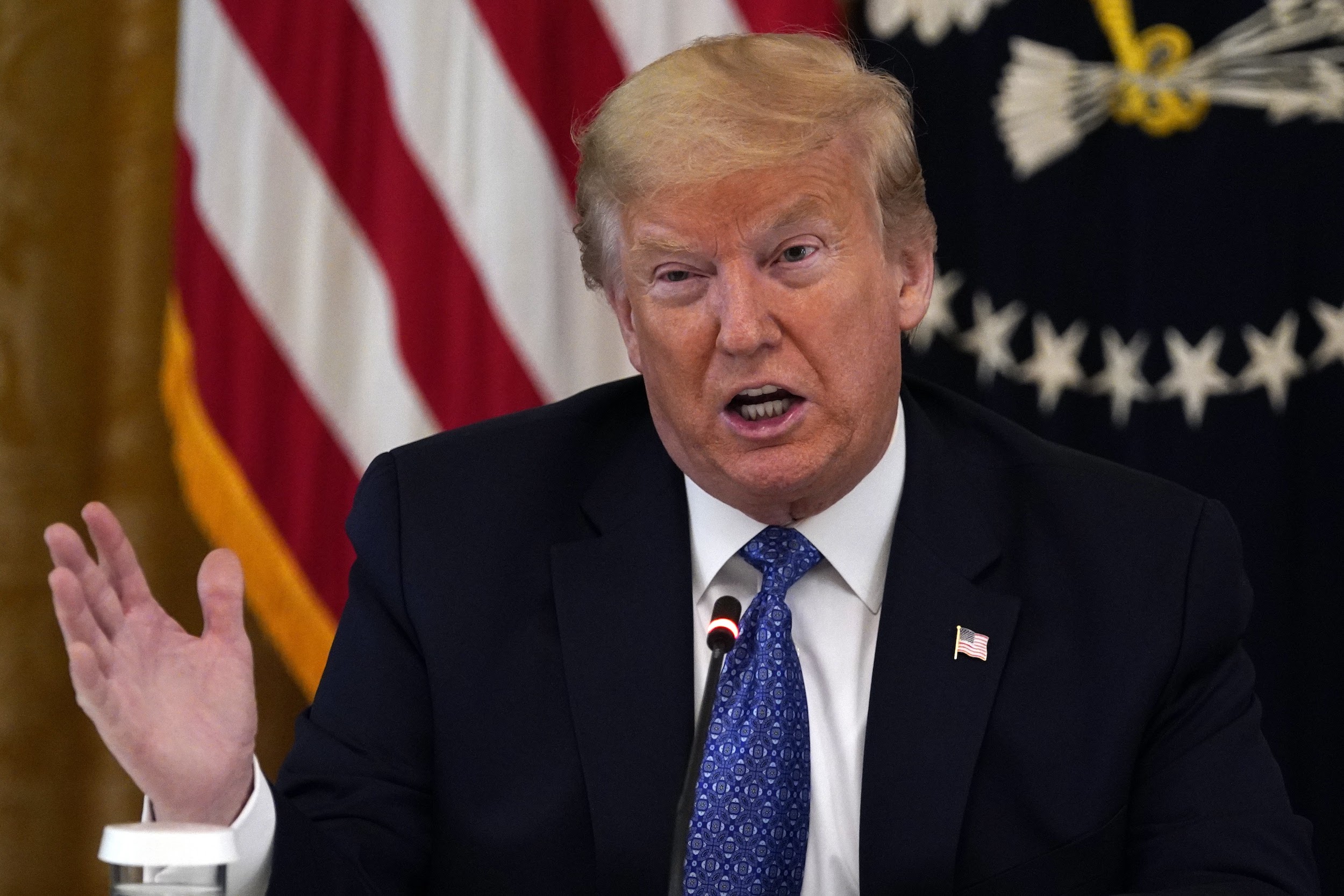
He
floated a delay until people could "properly, securely and safely"
vote.
There
is little evidence to support Mr Trump's claims but he has long railed against
mail-in voting which he has said would be susceptible to fraud.
US
states want to make postal voting easier due to public health concerns over the
coronavirus pandemic.
Under
the US constitution, Mr Trump does not have the authority to postpone the
election himself. Any delay would have to be approved by Congress. The
president does not have direct power over the two houses of Congress.
In a series of
tweets, Mr Trump said "universal mail-in voting" would make
November's vote the "most inaccurate and fraudulent election in
history" and a "great embarrassment to the USA".
He suggested -
without providing evidence - that mail-in voting, as it is known in the US,
would be susceptible to foreign interference.
"The
[Democrats] talk of foreign influence in voting, but they know that Mail-In
Voting is an easy way for foreign countries to enter the race," he said.
Mr
Trump also said postal voting was "already proving to be a catastrophic
disaster" in areas where it was being tried out.
In June, New York
allowed voters to vote by post in the Democratic primary poll for the party's
presidential candidate. But there have been long delays in counting the ballots
and the results are still unknown.
US
media report that there are also concerns that many ballots will not be counted
because they were not filled in correctly or do not have postmarks on them that
show they were sent before voting officially ended.
However,
several other states have long conducted votes by post.
Donald Trump can't
delay November's presidential election without Congress, partially controlled
by the Democrats, first approving the decision. If he didn't already know this,
someone has certainly told him by now.
The
president also must know that tweeting about a delay - even framed as an
"I'm just asking!" question - is sure to ignite a political
firestorm, particularly after he has repeatedly refused to say whether he'd
accept an adverse result in the upcoming presidential election.
Mr
Trump appears to be doing everything in his power to undermine the credibility
of November's vote, in which a record number of Americans are predicted to rely
on mail-in voting to avoid the risk of exposure to the coronavirus. He's
repeatedly made false and misleading claims about the reliability of the mail
balloting and suggested broad conspiracy theories. Critics warn that he could
be laying the groundwork for contesting the results - although the purpose may
be simply to give him a scapegoat if he loses.
His
tweet could also be an attempt to divert attention away from the truly dismal
second-quarter economic numbers just released. He's been relying on a financial
turnaround to breathe life into his re-election campaign, and instead the
outlook appears exceedingly gloomy.
Whatever the reason,
tweeting about an election delay is not the move of a candidate confident of
victory - and could be a sign of more desperate moves to come.
Quizzed by reporters
on whether a president could delay the election, Secretary of State Mike Pompeo
said he would not "enter a legal judgement on the fly". When pressed,
he said the justice department would "make that legal determination",
adding "we want an election that everyone is confident in".
Ellen
Weintraub, chairwoman of the US Federal Election Commission, said Mr Trump did
not have the power to move the election - and added: "Nor should it be
moved." She called for more funding for states to be able to run "the
safe and secure elections all Americans want".
Democrats
have been condemning Mr Trump's suggestion. New Mexico Senator Tom Udall said
there was "no way" the president could delay the election.
"But
the fact that he is even suggesting it is a serious, chilling attack on the
democratic process. All members of Congress - and the administration - should
speak out," he said.
Illinois
Congressman Raja Krishnamoorthi said the election would take place as scheduled
"regardless of what conspiracy theories he tries to push".
And
New Jersey Congresswoman Mikie Sherrill told MSNBC that Congress set the
election date and "we're not moving it".
However
Chris Stewart, a Republican congressman from Utah, said that while he did not
support delaying the election, Mr Trump had a legitimate point about postal
voting being hard to monitor.
"Can
you ensure the accuracy of mail-in voting? Now in some states you can. In my
state in Utah, for example, we've been doing it for quite a while, but we're a
small state with a relatively small population. It's harder to do on a national
scale," he told the BBC.
Earlier
this month, six US states were planning to hold "all-mail" ballot
elections in November: California, Utah, Hawaii, Colorado, Oregon and
Washington. Other states are considering it, according to a
postal voting campaign group.
These
states will automatically send postal ballots to all registered voters, which
then have to be sent back or dropped off on election day - although some
in-person voting is still available in certain limited circumstances.
About
half of US states allow any registered voter to cast their ballot by post on
request.
Critics
of postal voting argue that people could vote more than once via absentee
ballots and in person. Mr Trump has in the past said there was a risk of
"thousands and thousands of people sitting in somebody's living room,
signing ballots all over the place".
However,
there is no evidence of widespread fraud, according to numerous nationwide and
state-level studies over the years.
FROM .bbc.com/news/world-us-canada
No comments