
Sudan Coup: Military Warns Against Disturbances
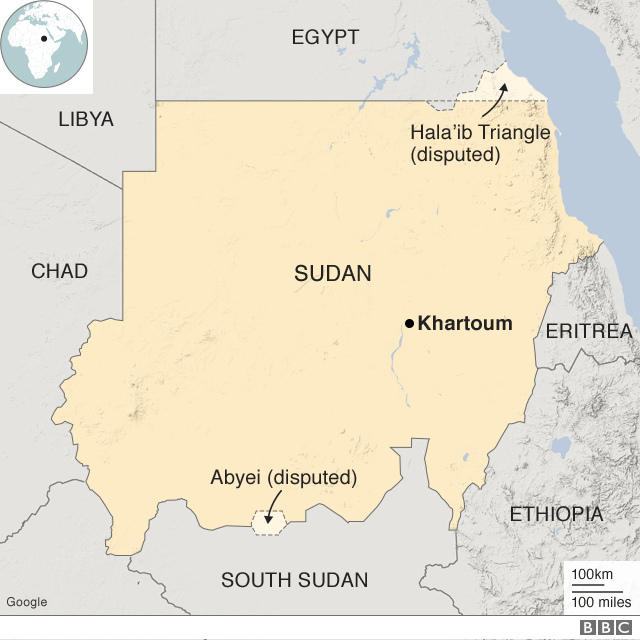

Sudan's
military coup leaders have warned protesters still on the streets that there
will be "zero tolerance" for disturbances.
A spokesman
insisted the army did not seek power and Sudan's future would be decided by the
protesters - but said the army would maintain public order.
Protesters
are still out in Khartoum, fearing the coup leaders are too close to ousted
ruler Omar al-Bashir.
The military
says it will not extradite Mr Bashir on war crimes charges.
Mr Bashir is
the subject of two international arrest warrants issued by the
International Criminal Court (ICC). He is accused of organising war crimes and
crimes against humanity in Sudan's Darfur region between 2003 and 2008,
allegations he denies.
However, he
may be put on trial inside Sudan, according to the military council set up
after the coup.
Mr Bashir,
one of the world's longest-serving leaders until he was ousted on Thursday, is
now in custody.
His downfall
followed months of unrest that began in December over rising prices. At least
38 people have died in the protests.
The army has
said it will oversee a transitional period followed by elections. As part of
this, it is imposing a three-month state of emergency, with the constitution
suspended.
The military
council will be in place for a maximum of two years, it says, but could last
only a month if the transition to civilian rule is managed smoothly.
Lt-Gen Omar
Zain al-Abidin, who heads the military council's political committee, said on
Friday: "The solutions will be devised by those in protest.
"You,
the people, will provide the solutions for all economic and political issues.
We have come with no ideology, we have come here to maintain order and security
to provide the opportunity for the people of Sudan to achieve the change they
aspire to.
"We
have no ambition to hold the reins of power. We are here to provide an
all-inclusive umbrella.
"Our
key responsibility is to maintain public order," he added. "We will
have zero tolerance for any misdeed in any corner of the country."
Later on
Friday state media said the military had asked political parties to name
representatives for a meeting with coup leaders at a later date.
Thousands
remained camped out near military headquarters in the capital on Friday,
ignoring a curfew declared by the military.
They are
demanding a transition to civilian rule before they return home.
The new
military council is headed by Defence Minister Awad Ibn Auf, who was previously
regarded as being well placed to succeed Mr Bashir.
During the
Darfur conflict, he was head of military intelligence. The US imposed
sanctions on him in 2007 in relation to his alleged support for militia
blamed for atrocities in Darfur.
On Thursday
Sara Abdeljalil, a member of the Sudanese Professionals' Association (SPA)
which has spearheaded the protests, called the new military council a
"continuation of the same regime".
"So
what we need to do is to continue the fight and the peaceful resistance,"
she said.
Reacting to
the military's statement on Friday, Khartoum resident Tagreed Abdin told the
BBC: "We don't know who's behind the military council.
"We are
used to hearing government double-speak but we need to see if they're really
interested in dialogue and listening to the voices of the people."
The army
said it had ruled out a violent response to the protests before Mr Bashir was
overthrown because they didn't want the loss of life. It will be difficult (of
course not impossible) to walk back on that.
There is
then the question of the dynamics within the army. Younger officers and rank
and file will have been emboldened by their role and public reception during
the protests. Will they be content to allow the Mr Bashir generation monopolise
military power?
And there's
the economic crisis brought about by misrule, corruption and loss of oil
revenues. Even the regime's friends in the Middle East and Asia will think
twice about rescue packages if it looks like a new version of the old venality
and brutality. That's an important pressure.
This is an
exciting moment. Just think about the role of women in all of this, of social
media and civil society. It's happening in Sudan but the significance of these
forces working peaceful for change is universal. Yes it's very precarious, but
also full of possibility.
UN
Secretary-General António Guterres appealed for "calm and utmost restraint
by all" and urged a transition that would meet the "democratic
aspirations" of the people. The UN Security Council is to discuss the
situation in a closed-door meeting on Friday.
UK Foreign
Secretary Jeremy Hunt said that a two-year military council was "not
the answer" and called for a "swift move to an inclusive,
representative, civilian leadership".
The African
Union condemned the military takeover, saying it was not an appropriate response
to the challenges facing Sudan and the aspirations of its people.
Russia,
which twice hosted Mr Bashir despite the international travel ban he faced,
called for calm.
FROM .bbc.com/news/world-africa-
No comments